1. The Intersection of Suspension and Ground
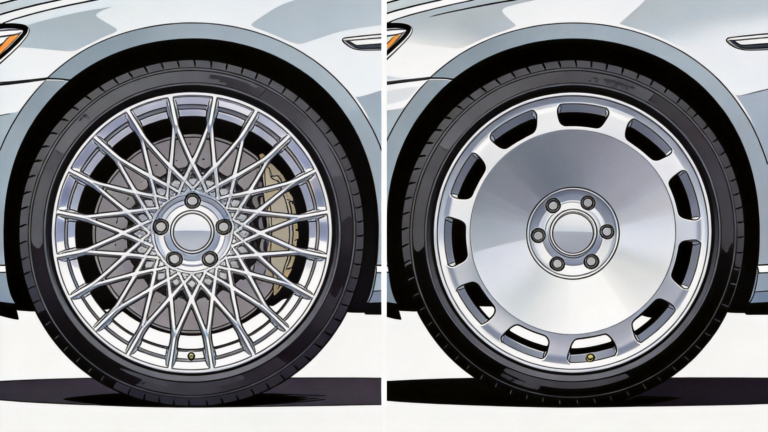
To begin with, Rims are precisely positioned at the end of each axle assembly. They function as the essential structural interface between the suspension system and the tires. Furthermore, they are bolted directly onto the wheel hub flange using high-strength lug nuts. Consequently, this specific location allows the vehicle to transfer engine torque effectively to the road surface. For this reason, their alignment determines the overall tracking stability of the car.

2. Housing the Internal Braking Components
Furthermore, the hollow interior of the Rims provides critical housing space for the braking system. This strategic placement allows the brake rotors and calipers to sit securely within the wheel’s diameter. In addition, the gap between the spokes facilitates the rapid dissipation of thermal energy during deceleration. Meanwhile, engineers must ensure there is enough clearance to prevent any mechanical interference during sharp turns. Therefore, the physical dimensions of this component are vital for safety.
3. Serving as the Foundation for Tire Seating
In addition to housing brakes, Rims provide the rigid circumference required for mounting the rubber tires. The tire beads sit firmly against the inner edges of the metal structure to maintain an airtight seal. Consequently, this joint must withstand extreme air pressure and constant rotational centrifugal forces. Moreover, the width of this mounting surface affects the shape and contact patch of the tire. Thus, the integrity of this position directly influences the vehicle’s grip levels.
4. The Center of Unsprung Mass Dynamics
Moreover, the position of the Rims places them squarely within the category of unsprung mass. Since they sit below the springs, their weight affects how the suspension reacts to road bumps. Specifically, a lighter structure at this location allows the shock absorbers to work more efficiently. This leads to a significant improvement in ride quality and steering feedback for the driver. Therefore, optimizing the weight at this specific point is a primary goal for performance tuning.
5. Final Thoughts on Structural Alignment
In conclusion, the precise location of the Rims makes them a cornerstone of automotive mechanical engineering. They occupy the high-stress zone where power, braking, and steering all converge. Furthermore, regular inspections of the mounting hardware are necessary to ensure the assembly remains secure. Finally, understanding this critical placement helps drivers appreciate the complex balance of their vehicle’s chassis.