1. The Foundation of Vehicle Load Bearing
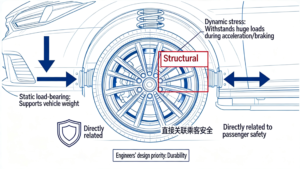
To begin with, wheels serve as the primary load-bearing components of any automotive chassis system. They must support the static weight of the vehicle at all times. Furthermore, they endure massive dynamic stresses during acceleration and heavy braking. Consequently, the structural integrity of each rim is directly linked to passenger safety. For this reason, engineers prioritize durability over all other design factors.
2. Material Science and Fatigue Resistance
Furthermore, the choice of materials determines the long-term reliability of the component. For instance, high-grade aluminum alloys offer excellent resistance to metal fatigue. In contrast, low-quality metal mixtures may develop microscopic cracks under constant vibration. Therefore, it is essential to select wheels that meet strict international safety standards. Additionally, advanced heat treatment processes can further enhance the crystalline structure of the alloy.
3. Heat Dissipation and Braking Synergy
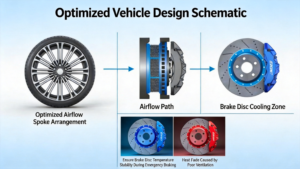
In addition to structural strength, the visual design of wheels serves a functional purpose. The specific arrangement of the spokes helps to manage airflow around the braking system. Consequently, this airflow effectively cools the brake discs during intense operation. Without proper ventilation, the brakes might suffer from dangerous thermal fading. Thus, a well-engineered wheel design ensures consistent stopping power during emergency situations.
4. The Impact of Geometry on Handling
Moreover, the physical dimensions of the wheels must perfectly match the vehicle’s suspension geometry. For example, the offset value determines the exact position of the wheel relative to the hub. If the offset is incorrect, it may cause uneven tire wear or unstable steering. In addition, improper fitment can place excessive stress on the wheel bearings. Eventually, these mechanical imbalances could lead to a catastrophic failure at high speeds.
5. Impact of Unsprung Mass on Control
Furthermore, reducing weight without sacrificing strength is a major engineering challenge. Lighter wheels reduce the unsprung mass of the vehicle significantly. As a result, the suspension can react much faster to uneven road surfaces. This improved reaction time keeps the tires in constant contact with the ground. Therefore, high-quality rims provide better grip and more predictable handling during cornering.